A North Carolina Landowner's Guide to Building a Pond
Straight answers to the questions people ask us before they build, written by the crew that digs them.
Read These Before You Dig
A pond is a big investment, and it can be hard to find good information for this part of the country. A lot of what is online is written for somewhere else, or written to sell you something. We put these together for landowners in the North Carolina Piedmont.
Building a Pond in North Carolina, Step by Step
- Decide what the pond is for. Stock water, irrigation, fishing and looks all pull the design in different directions.
- Pick a likely spot. Look for a natural draw with room for a dam, where machines can get in and nothing important sits downhill.
- Check the soil and water. You need enough clay to seal and the right amount of land draining to the site. NC State Extension calls for 5 to 20 acres of watershed per surface acre in pasture, and 20 to 40 in woods.
- Ask about permits. Streams, wetlands, large dams and an acre or more of disturbance can each bring rules into play. Local thresholds can be lower.
- Get a price from a site visit. The amount of dirt moved drives cost more than the size of the pond does.
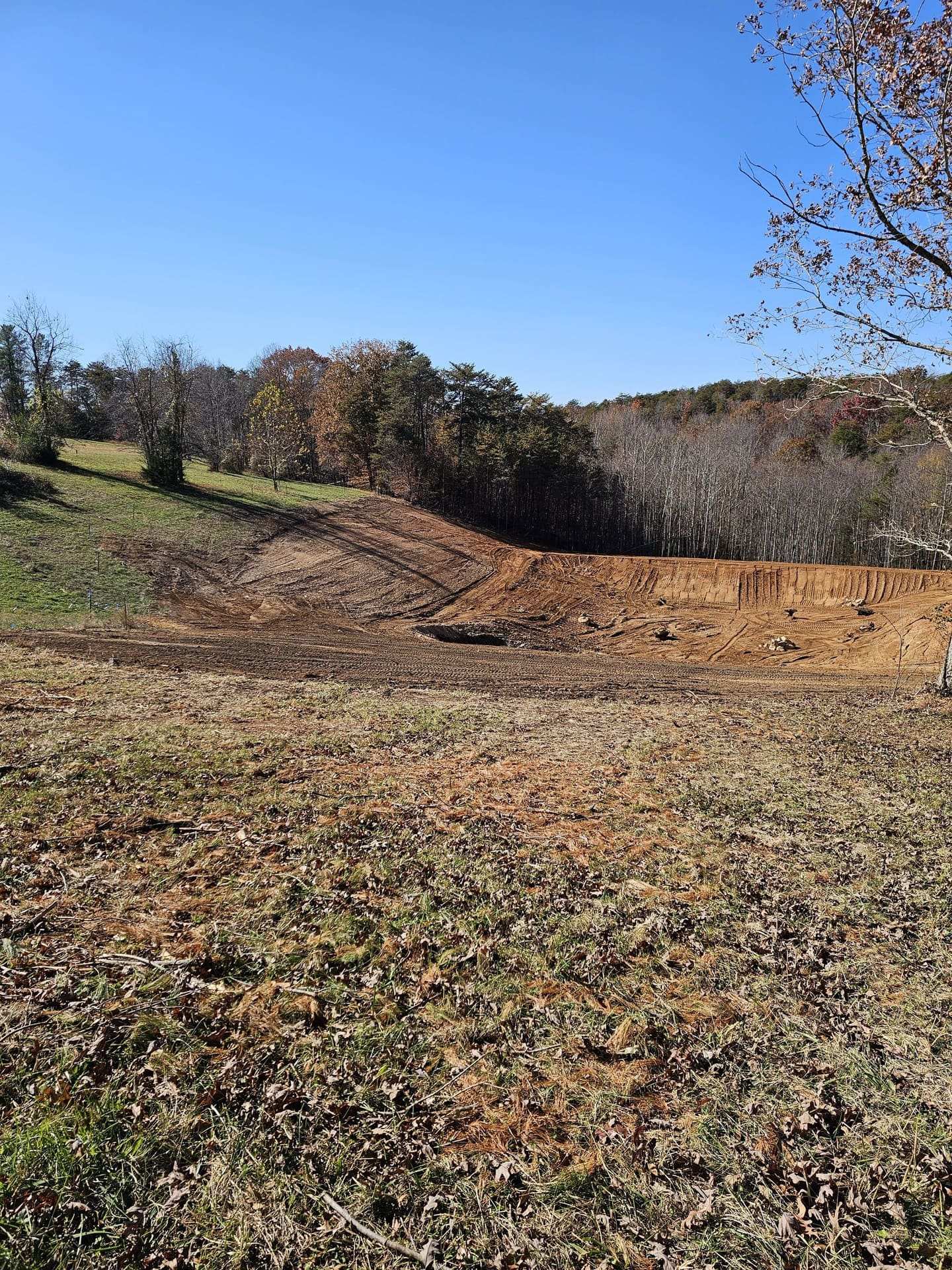
- Build in the right order. Clear and strip, cut the basin, compact the dam in layers, set the overflow, and stabilize the banks.
- Let it fill, then stock it. Filling can take a few storms or many months. If your pond is not self-contained, the NC Wildlife Resources Commission requires a permit to stock fish.
Go Deeper
Will My Land Hold a Pond?
The clay, slope and water questions that decide whether a site is worth digging.
What a Pond Costs in North Carolina
What actually moves the price of a farm or fishing pond, and how to compare bids.
Pond Permits in North Carolina
Dam safety, streams and wetlands, erosion control, and who to call before you dig.
Ready for the next step? See how we build ponds, or take a look at the differences between farm ponds and fishing ponds.
Have a Question That Isn't Here?
Call and ask. If it turns out your land is not a good fit for a pond, we would rather tell you that now.