Pond Construction in the North Carolina Piedmont
A Pond Is Only as Good as the Ground Under It
Anyone with an excavator can dig a hole. A good pond builder gets that hole to stay full for the next thirty years. Most failed ponds come down to the same things: soil that was never checked, a dam that was pushed up instead of compacted, or an overflow too small for the storm that finally came.
We have worked the clay, slopes and wet-weather habits of this part of North Carolina for nearly a decade. The red clay around here can make a tight pond, but it is not uniform. Dig in one corner of a pasture and you may find good sticky clay. Dig a hundred yards away and you could hit sandy seams or rock. That is why we look before we promise anything.
Ponds We Build
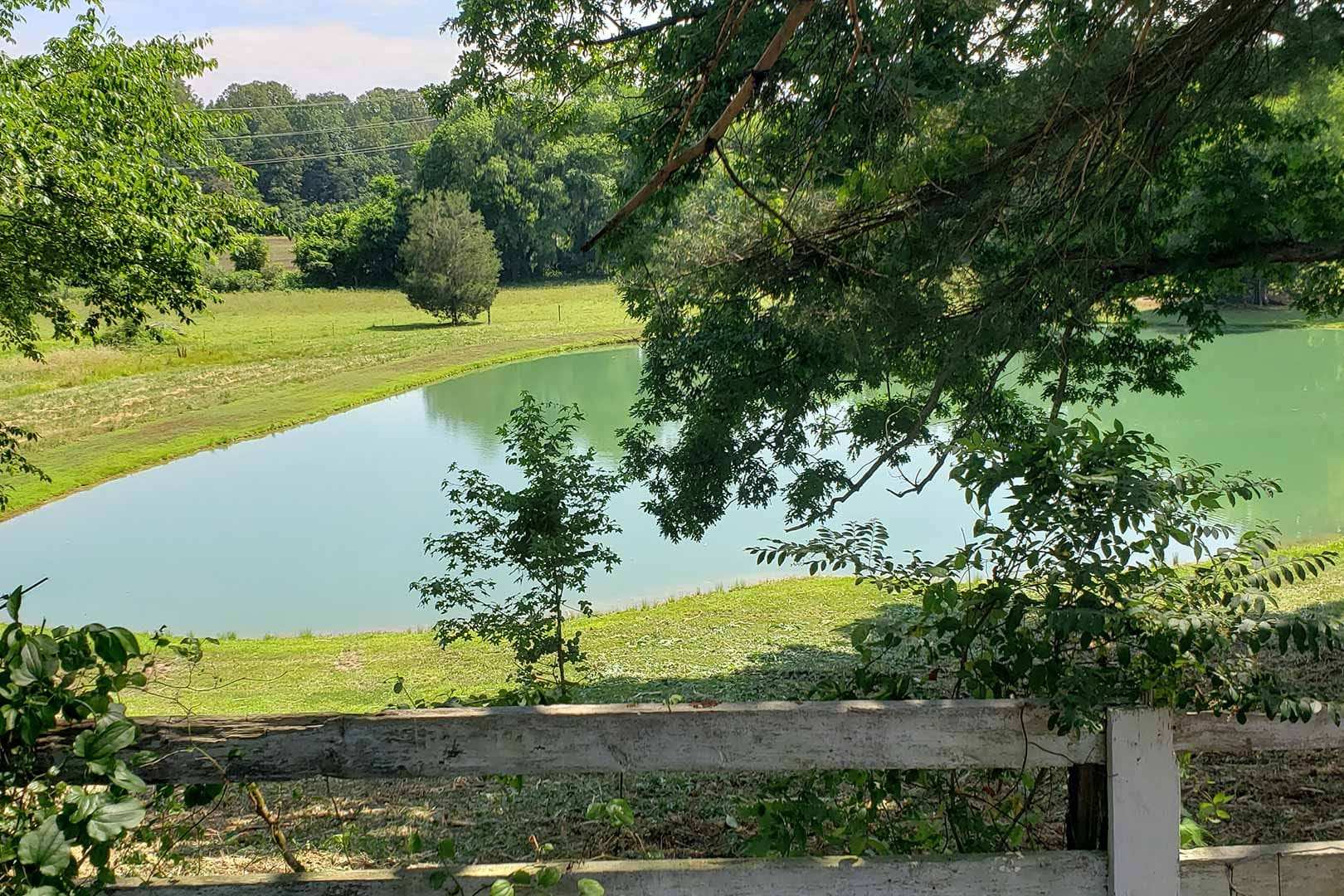
Farm ponds
Stock water, irrigation, and a dependable supply when a dry August hits. We plan access, depth and location around how your operation actually runs.
Fishing ponds
A place for bass, bream and catfish, and for the family to spend an evening. Depth, edge slopes and bottom shape all affect how well a pond fishes years down the road.
Retention ponds
Basins that hold back runoff and let it out slowly. Larger retention projects are usually tied to an engineered plan, and we can build to that plan. If water is the problem and you do not need a pond at all, look at our drainage work.
Decorative ponds and water features
Sometimes a pond is there simply because it makes the view better from the porch. The same rules about soil and water still apply.
How Your Pond Gets Built
Every site changes the plan some, but the order of the work holds steady.
Walk the land
We start on foot. We want to see the slope, where water runs in a hard rain, how far your watershed reaches, and what you want from the pond. This is also when we tell you if a site is a bad bet.
Check the soil
The dirt on top does not tell the whole story. We check what is underneath, because a seam of sand or fractured rock in the wrong place will drain a pond no matter how nice it looks on day one.
Plan the pond
Size, depth, dam location and overflow get decided around your use and your ground. Anything that may need outside review, such as a stream, a wetland or a large dam, gets raised here and not after the machine shows up.
Clear and strip
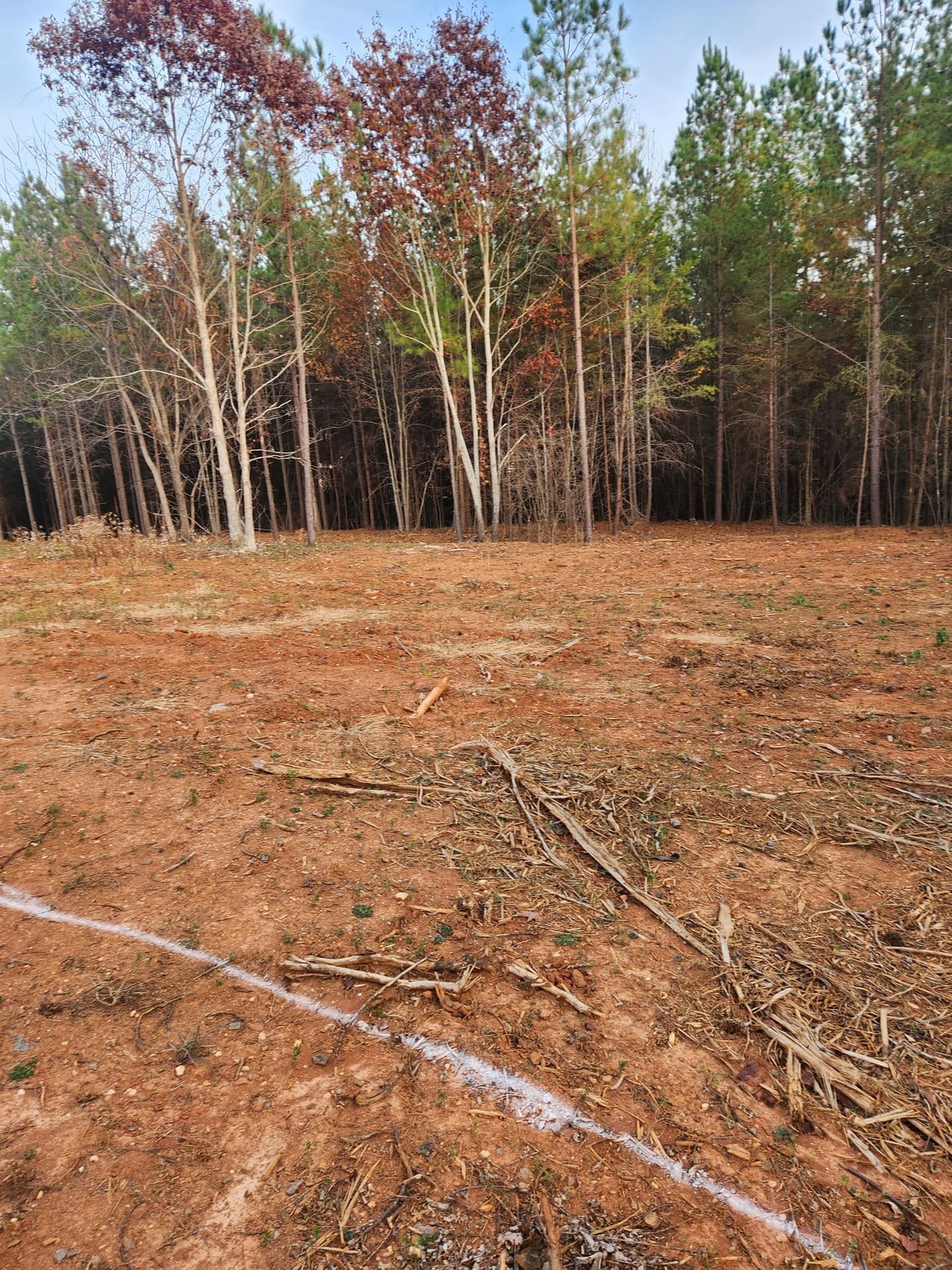
Trees, roots and topsoil come off the pond and dam footprint. Organic material left under a dam can rot out and leave a path for water, so it has to go.
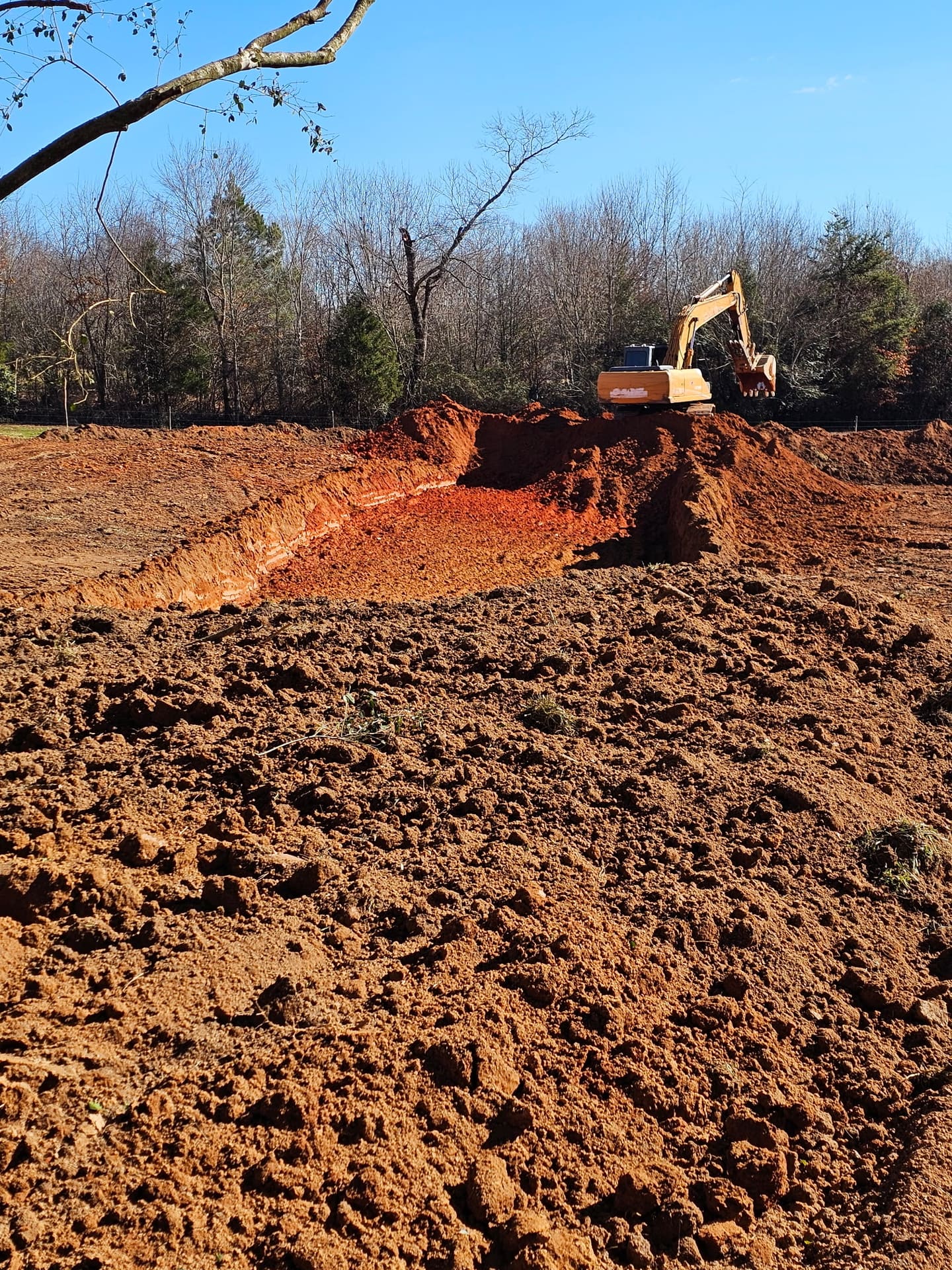
Dig the basin and build the dam
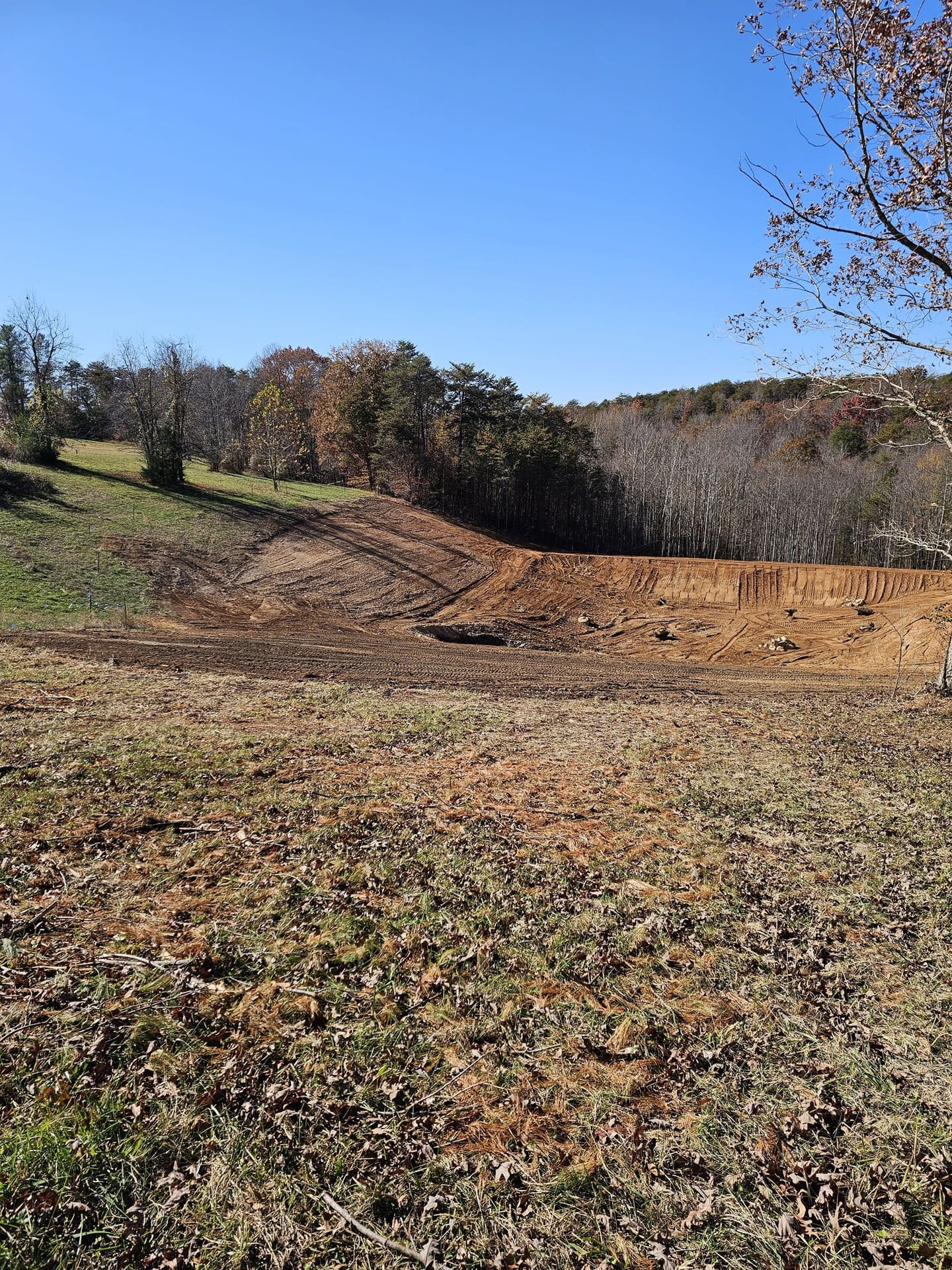
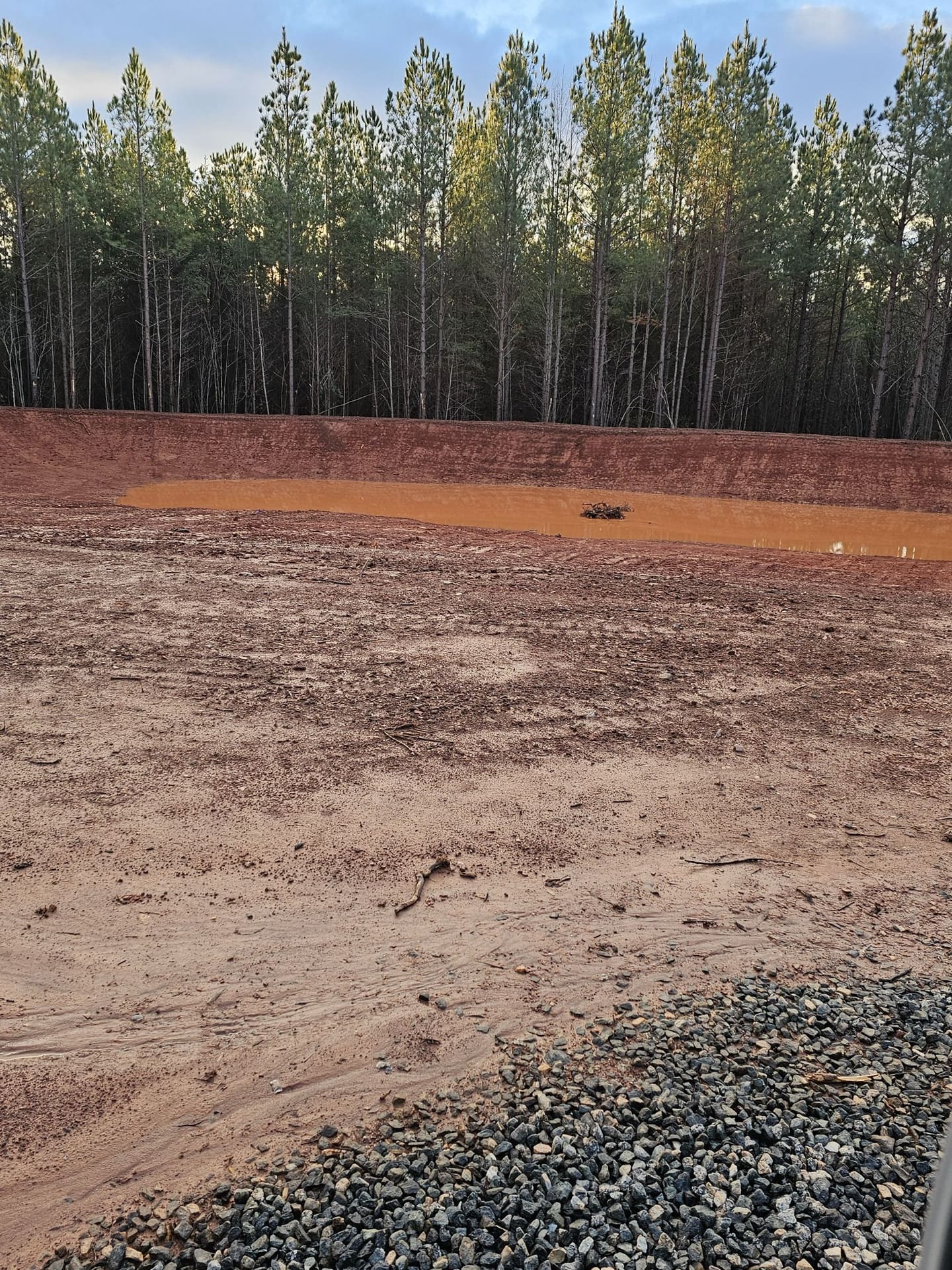
The basin gets cut to depth and shaped. Good clay goes in the dam, placed in layers and compacted at the right moisture with multiple passes. Sound work here is the difference between a pond that holds and one that weeps.
Spillway and final grade
The overflow gets set so that heavy water leaves the pond in a controlled way without running across the top of the dam. Then we finish the grading, stabilize the disturbed ground and clean up.
Rules, Permits and Getting It Right the First Time
A pond often sits where several sets of rules can touch it. In North Carolina, a dam can fall under the state Dam Safety Law if it reaches 25 feet high and impounds 50 acre-feet, or if the state decides that its failure could cost lives or do serious damage downstream. Work in streams and wetlands can require federal and state approval, and disturbing an acre or more typically calls for an approved erosion control plan. Exemptions exist for some agricultural ponds, but they have conditions.
We flag these early so that you can talk to the right office before you spend money. Our North Carolina pond permit guide lays out who handles what.
Where We Build Ponds
We are based in Walnut Cove and build across Stokes County, Forsyth County, Rockingham County and Guilford County, and we travel across North Carolina for larger ponds. See every city we serve. If you are farther out, call and tell us about your property. For a pond worth the trip, we are glad to talk.
Pond sites often need other work first. We also handle land clearing, forestry mulching and excavation and grading, so one crew can take the job from woods to water. You can read more about who we are and why ponds are where we are headed.
Pond Building Questions
How long does it take to build a pond?
It depends on size, access, how much clearing comes first, and the weather. Wet clay cannot be worked or compacted properly, so a rainy stretch can stop a job for good reason. We give you a realistic schedule after seeing the site.
How long does a new pond take to fill?
A pond fed only by rain and runoff can fill in a few storms or take many months. The size of the watershed, the season and the rainfall all matter. Spring-fed sites and ponds with a pumped supply are different, so we go over your water source during the site visit.
Will my pond need a liner?
Most Piedmont ponds are built to hold water with compacted clay, not a liner. Where the soil is short on clay, the options include bringing in clay, treating the soil, or moving the pond. If a site would need expensive fixes, we tell you up front.
What is a good depth for a pond?
It depends on what the pond is for. A fishing pond benefits from deeper water for summer heat and steep enough edges to slow weed growth. A stock pond needs safe access and dependable water through a dry spell. We set the depth around your use and what the ground allows.
Can you build a pond on a stream?
Damming a stream brings in rules that a pond off to the side does not. Federal and state water quality rules may apply, even to farm ponds. We look at this at the first visit and point you to the right agency. Our pond permit guide has the details.
Can I get help paying for a farm pond?
North Carolina’s AgWRAP program has offered cost share for ponds that supply irrigation or livestock water. It carries its own rules, including an engineer-sealed design. Your county Soil and Water Conservation District can tell you what is currently available.
Have a Spot in Mind for a Pond?
Tell us where it is and what you want it for. We will come walk it with you and give you a straight answer and an estimate.