Forestry Mulching Near Winston-Salem and Walnut Cove
One Machine, One Pass, No Piles
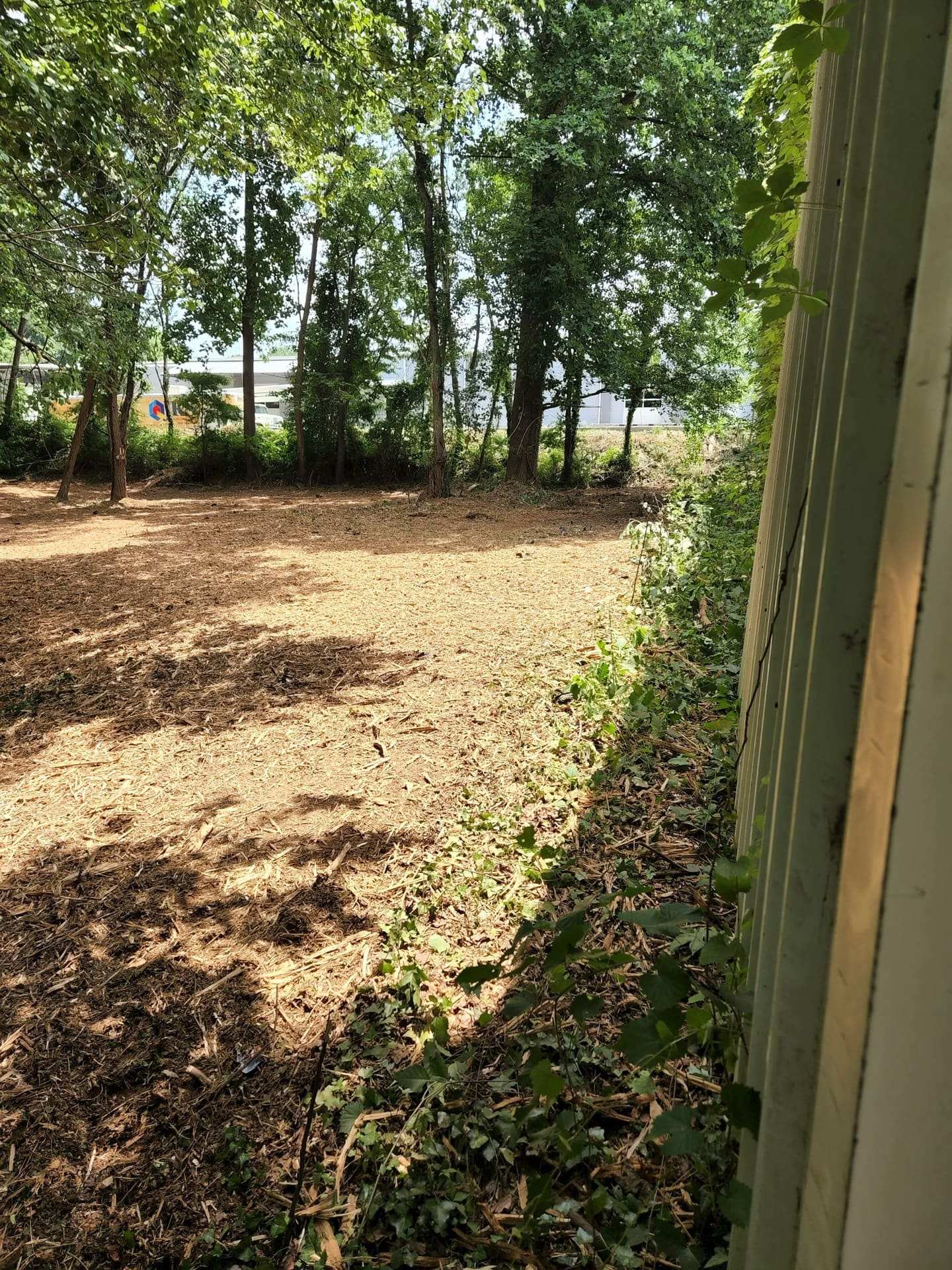
A forestry mulcher is a heavy rotating head on a tracked machine. It chews through brush and small trees and leaves them on the ground as a layer of wood chips. There is no pile to burn, no debris to load, and very little disturbed soil.
For a lot of properties, it is the fastest way to turn a jungle back into something you can walk through and enjoy. That layer of mulch also helps hold the soil and keep rain from washing it away on sloping ground.
Where Mulching Works Well
- Overgrown pastures and old fields that went to sweetgum, cedar, privet and briars
- Fence rows and property lines you need to see, walk, or fence again
- Woods with too much underbrush, where you want to keep the big trees and clear out the rest
- Trails, shooting lanes and food plots on hunting land
- View corridors from a house or ridge down to a pond or pasture
- Banks and slopes where tearing out the roots would invite erosion
Where It Is Not the Right Tool
Mulching leaves stumps and roots in the ground, so it is not the right choice for a house pad, a pond dam, or ground you plan to till. Those need full land clearing with stumps removed. Many properties use both: full clearing where the building goes and mulching everywhere else. We will tell you where the line should fall.
What to Expect
We walk the property with you first and agree on what stays. On the day of the job, the machine works through the area with the chips landing where the growth stood. You will see a coarse layer of mulch that softens and breaks down over time. Grass and new growth will come up through it, so plan on keeping it mowed if you want it to stay open.
Thinking about a pond down the hill? Mulching a path to the spot is a cheap way to get a good look at it, and it makes planning a pond much easier.
Where We Mulch
We work out of Walnut Cove, across Stokes County, Forsyth County, Rockingham County and Guilford County, including Winston-Salem, Greensboro and King. See every city we serve.
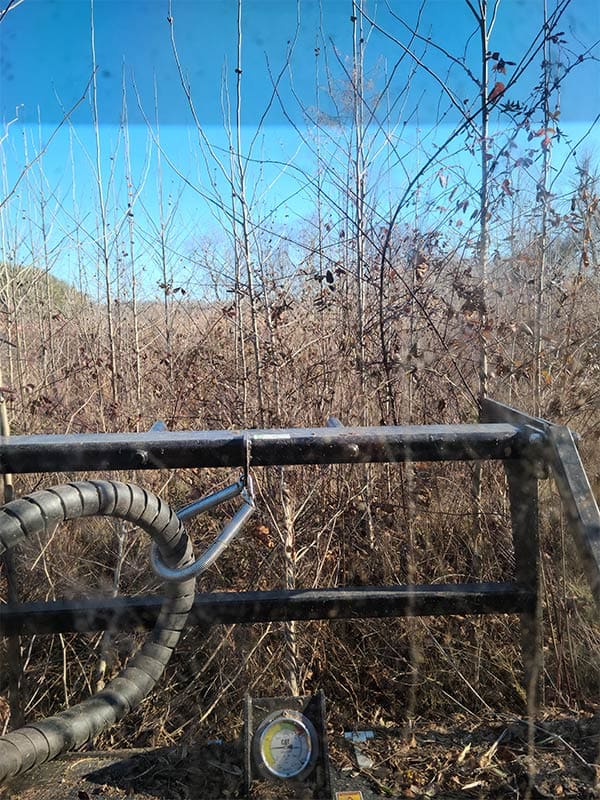
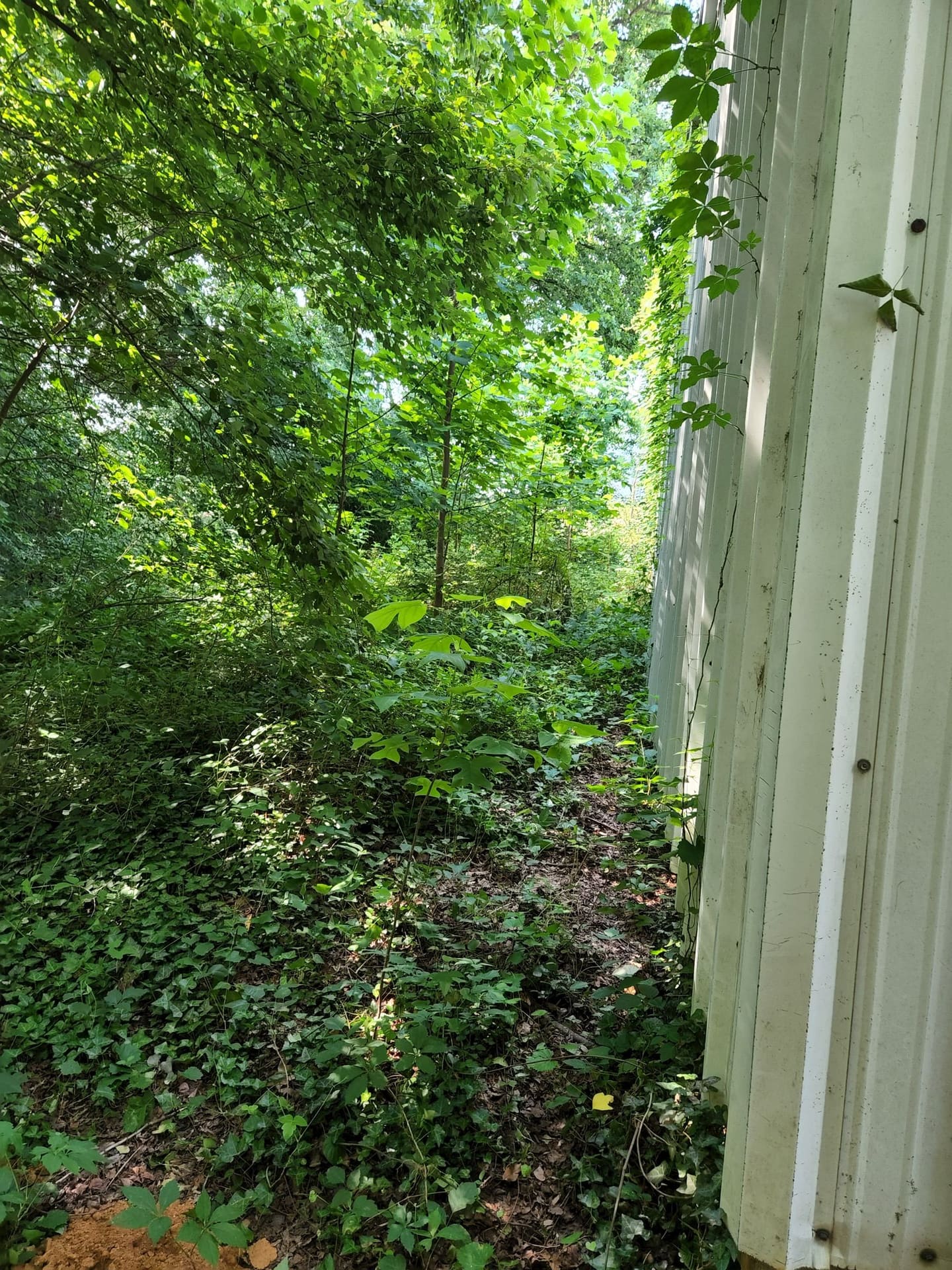 Before
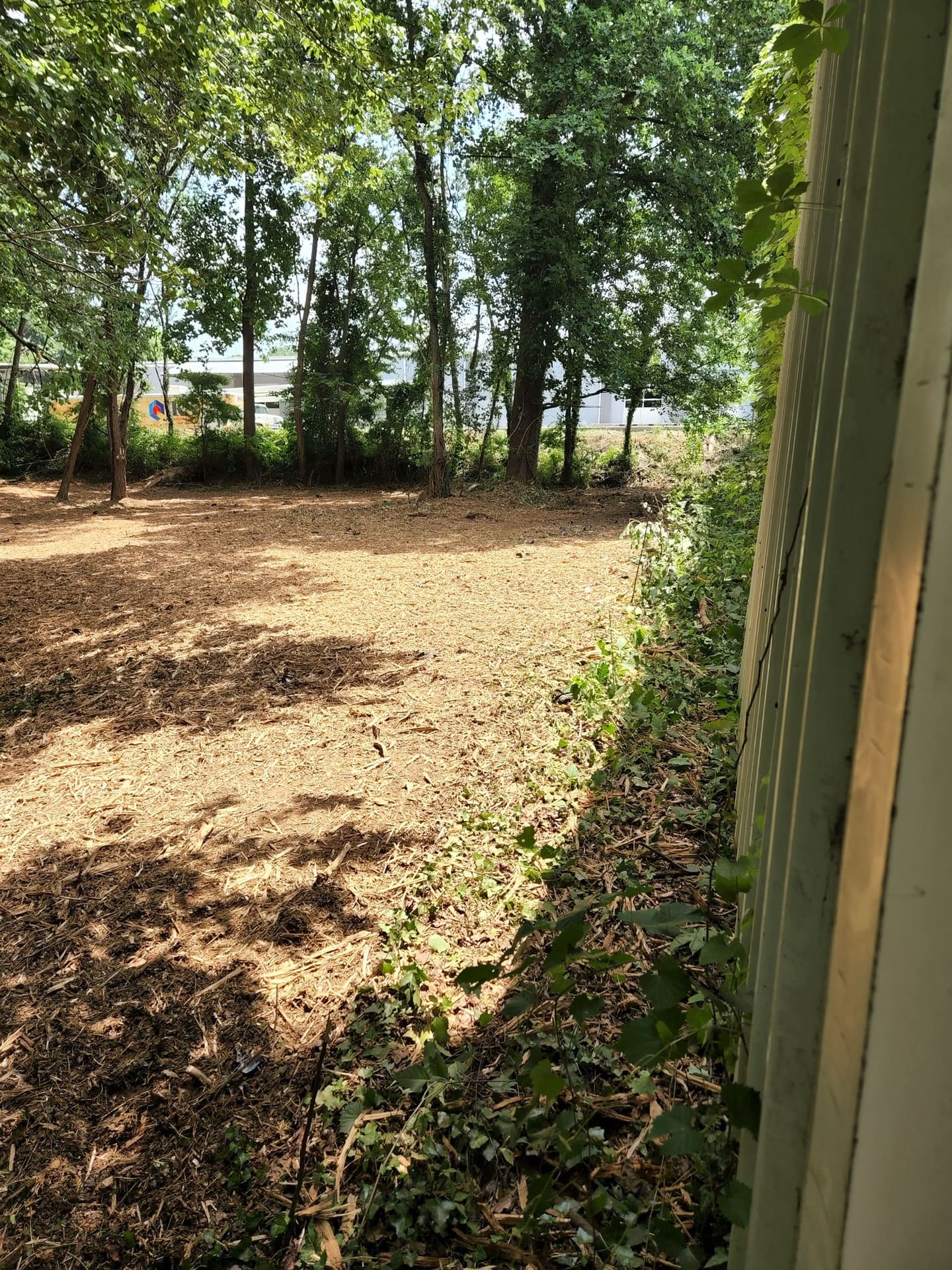 After
Forestry Mulching Questions
Will the brush grow back after forestry mulching?
Some will, because the roots stay in the ground. Hardwood stumps in particular can sprout. Regular mowing or follow-up work keeps it open, and mulched ground is much easier to maintain than what you started with.
How big of a tree can you mulch?
It depends on the species and the machine, and past a certain size, it is better to cut the tree or leave it. Mulching is best suited to brush, saplings and smaller trees. We will tell you what we would do with the bigger ones when we see them.
Can you mulch on steep or wet ground?
Often, within reason. A tracked machine is easier on the ground than most equipment, but very steep slopes and soft ground have their limits. We need to see the site to say for sure, and wet ground may need to wait for a dry spell.
Is mulching cheaper than land clearing?
Usually, for the same acreage, because there is no stump pulling or hauling. But it leaves a different result. If you plan to build, farm or dig, you may still need full clearing.
Ready to See Your Land Again?
Call Justin or send a few details about the property. We will come look at the ground, tell you what we honestly think, and give you a clear plan and a price.