
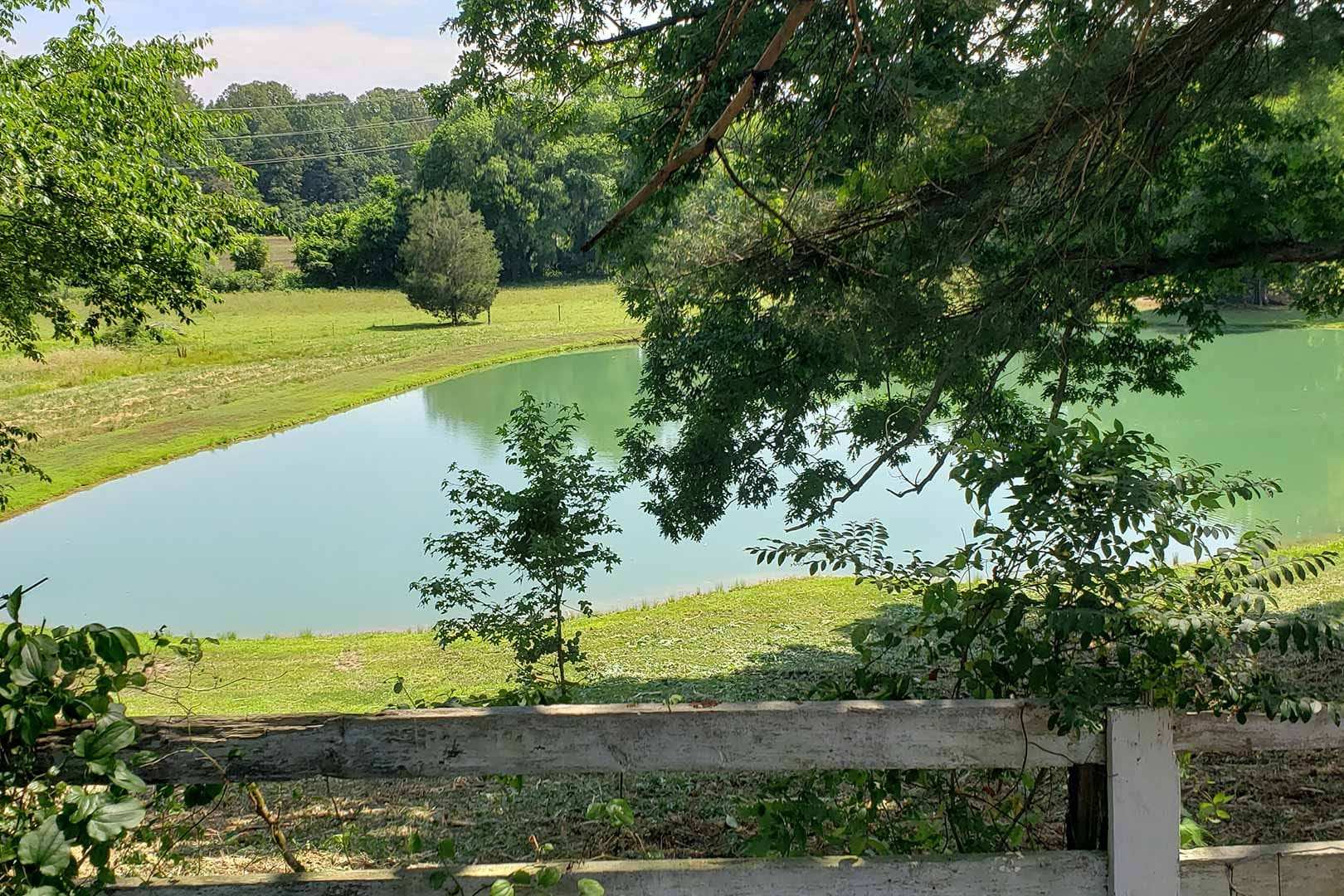
Fishing Pond Construction in North Carolina
Good Fishing Starts Before There Is Any Water
Once a pond fills, its shape is locked in under the water. Fixing a muddy, weed-choked pond later costs far more than getting the edges and depth right while the machine is already there. If fishing is why you want a pond, tell us at the first visit. It changes how we build.
What Makes a Pond Fish Well
The right amount of watershed
A pond with too much land draining to it gets flushed with muddy water and loses nutrients and fish over the spillway every big storm. NC State Extension's Pond Management Guide calls for 5 to 20 acres of watershed per surface acre in pastureland and 20 to 40 acres in woodland. Too little, and the water level sinks in a dry summer. Finding the middle ground is a big part of picking your site.
Enough depth, but not too much
Fish need room when summer heats the water and when a drought pulls the level down. Past a certain point, though, the bottom water runs out of oxygen and more depth just costs you more dirt work. NC State suggests averaging 6 to 8 feet on a pond of an acre or more, with a maximum of 10 to 12.
Edges that do not grow up in weeds
Long, shallow flats warm up fast, and that is where weeds take over. NC State recommends cutting banks so they drop 1 foot for every 2 or 3 feet toward the center. That limits weed growth and gives you a place to cast from. We can still leave some shallower areas for spawning if you want them.
Structure on the bottom
Before the water comes up is the easiest time to shape humps, ledges and channels, or to set aside brush and rock for cover. Tell us what you have in mind, and we can use what the clearing and digging turn up.
Room to get to the water
We can leave a truck path, a level spot for a dock, or a gentle slope to launch a jon boat. These are simple to include during the dig and much harder to add later.
How a Fishing Pond Gets Built
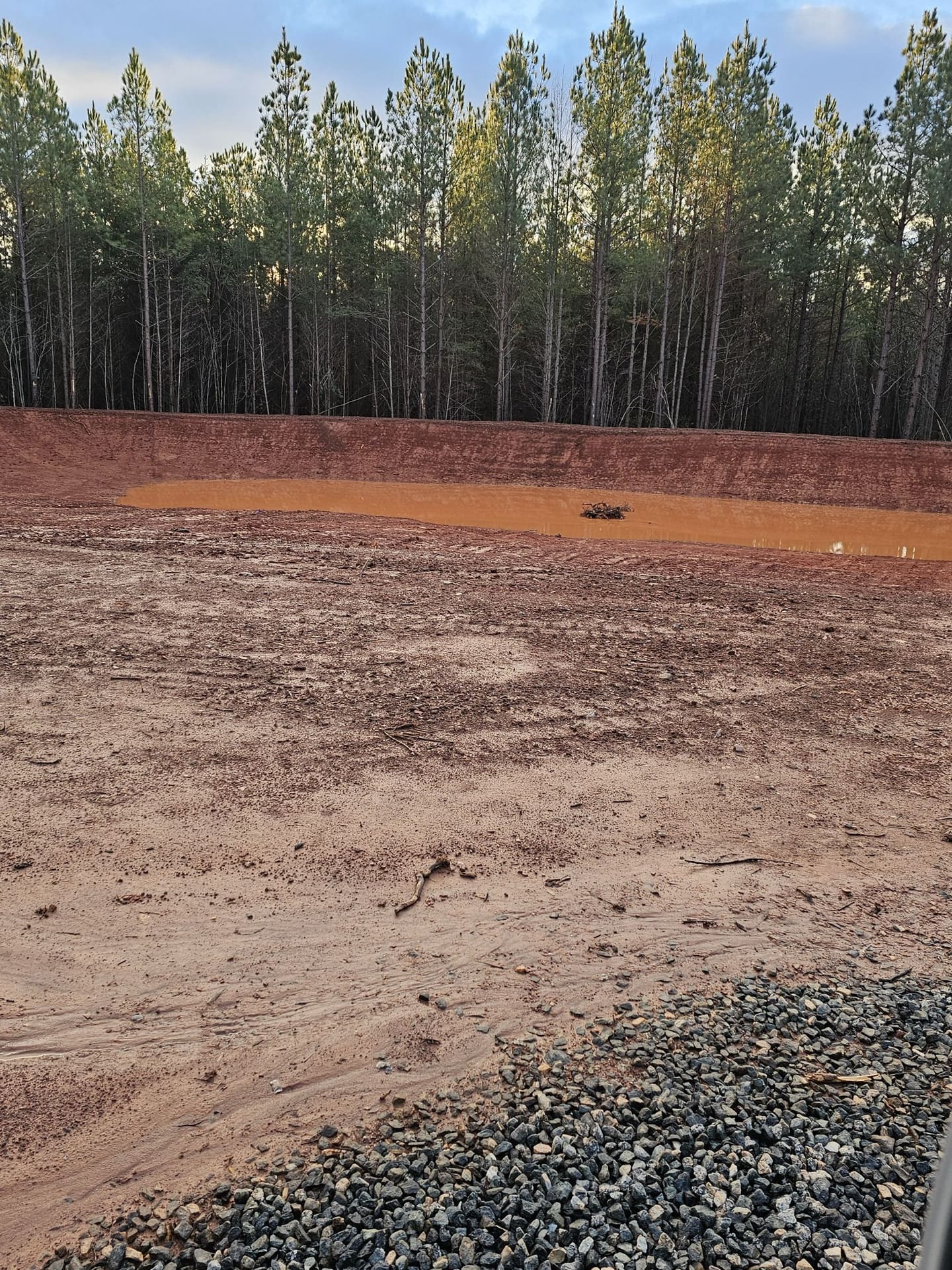
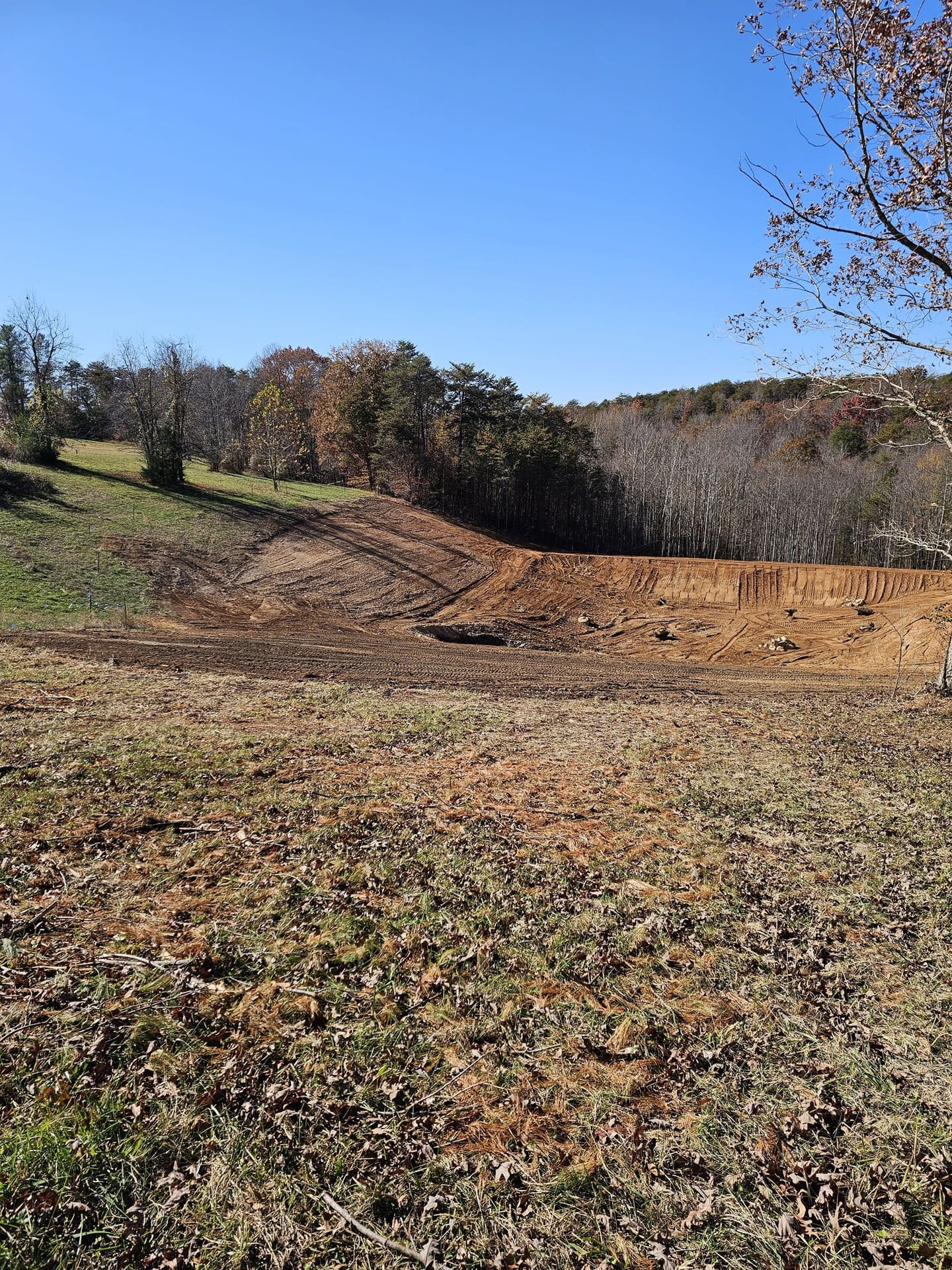
The site work is the same careful process as all of our pond construction: check the soil, strip the footprint, cut the basin, build the dam in compacted layers, and set an overflow that can handle a hard rain. Not sure about your site? Start with our guide on whether your land will hold a pond.
Once it is full, your best resources for stocking and management are NC State Extension and the NC Wildlife Resources Commission, which issues the stocking permit that ponds that are not self-contained need. We are pond builders and not fish biologists, and we would rather point you to the right people.
Where We Build Fishing Ponds
We build for landowners across Stokes, Forsyth and Rockingham Counties and Guilford County, including Winston-Salem, Greensboro and King. See every city we serve.
Fishing Pond Questions
How deep should a fishing pond be?
NC State Extension’s Pond Management Guide says a pond of an acre or more should average 6 to 8 feet deep, with a maximum of 10 to 12 feet. Going much deeper usually adds cost without adding fish, because the deepest water runs low on oxygen in summer. Your site and pond size may change those numbers.
When can I stock a new pond?
After it has filled and settled. NC State Extension’s guide has sunfish and catfish going in during the fall and largemouth bass the following June, so the bass have something to eat. If your pond is not self-contained, North Carolina also requires a fish stocking permit from the NC Wildlife Resources Commission before you stock.
What fish should I put in my pond?
NC State Extension’s guide builds its standard stocking plan around largemouth bass, bluegill and redear sunfish, with channel catfish as part of the mix. Stocking is a separate step from construction, and your extension agent or a fish supplier can help you plan numbers.
Do you stock fish?
We build the pond. Stocking and fish management are better left to a fisheries supplier or biologist, and we can plan the pond with their advice in mind.
Ready to Talk About Your Pond?
We will walk your land, look at the spot you have in mind, and tell you straight what kind of pond it can be.