
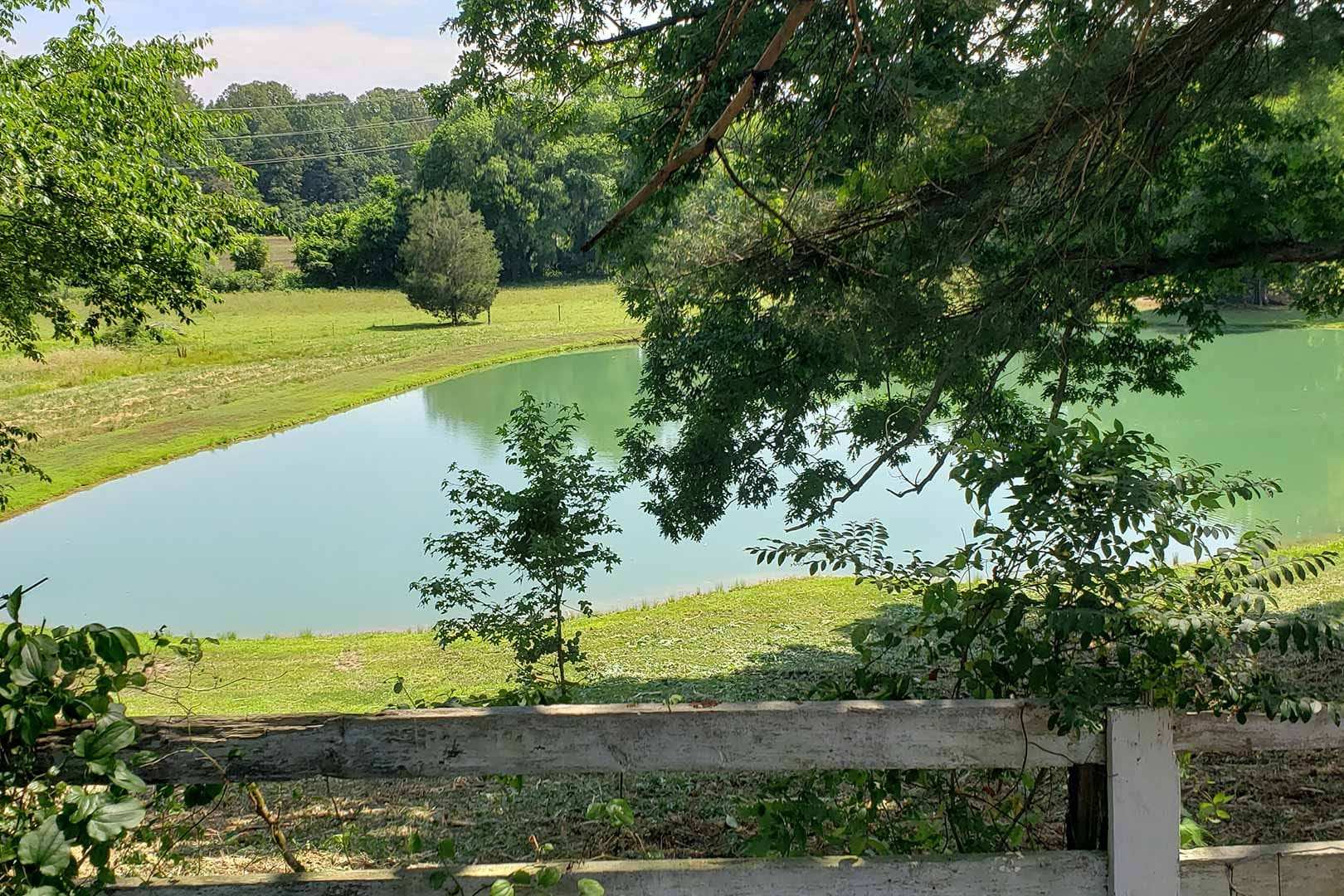
Farm Pond Construction in North Carolina
Water You Can Count On in a Dry Year
A farm pond has a job to do. It may water a herd through August, run an irrigation pump for a market garden, or give you a backup when a creek goes low. That job should decide where the pond goes and how it gets built.
We work with farmers, cattle and horse owners, and families holding on to the home place across Stokes, Rockingham, Forsyth and the surrounding counties. We clear, dig, build the dam and shape the ground ourselves, so you have one person to call about the job.
What We Plan Around on a Farm Pond
Where the water comes from
Runoff, a spring, a well or a stream can all feed a pond, and each one carries its own tradeoffs. Too little watershed and the pond drops every summer. Too much and every storm pushes mud and heavy flow through your spillway. We look at what drains to the site before settling on a location.
How you will use it
A pond built for irrigation has to hold a usable volume above the level you are willing to draw down to. Livestock water needs safe access or a way to get water to a trough. If you plan to pull a pump or a tank up to the bank, the ground around it needs to carry that weight in wet weather.
How it fits your fields
We try not to give up your best hay ground if a poorer draw would work as well. We also think about where the spoil goes. That extra dirt can fill a low spot, build up a pad, or improve a farm road when it is planned ahead of time.
The dam and the overflow
Farm pond dams get walked on, mowed and neglected for years, so they need to be built for that. Clay placed in compacted layers, a spillway that can handle a big storm, and banks that stay covered in grass make the difference. Trees growing on a dam can eventually lead to leaks, so we tell you how to keep the dam in shape after we leave.
Help Paying for an Agricultural Pond
North Carolina's AgWRAP program has offered cost share for ponds built to supply irrigation or livestock water. The NC Department of Agriculture lists a rate of 75 percent, or 90 percent for new and limited-resource farmers, up to a set maximum. It requires a conservation plan and a design sealed by a professional engineer, along with a 10-year maintenance period. Your county Soil and Water Conservation District is the place to start, and it is best to go there before any dirt moves.
Permit questions are covered in our guide to NC pond permits.
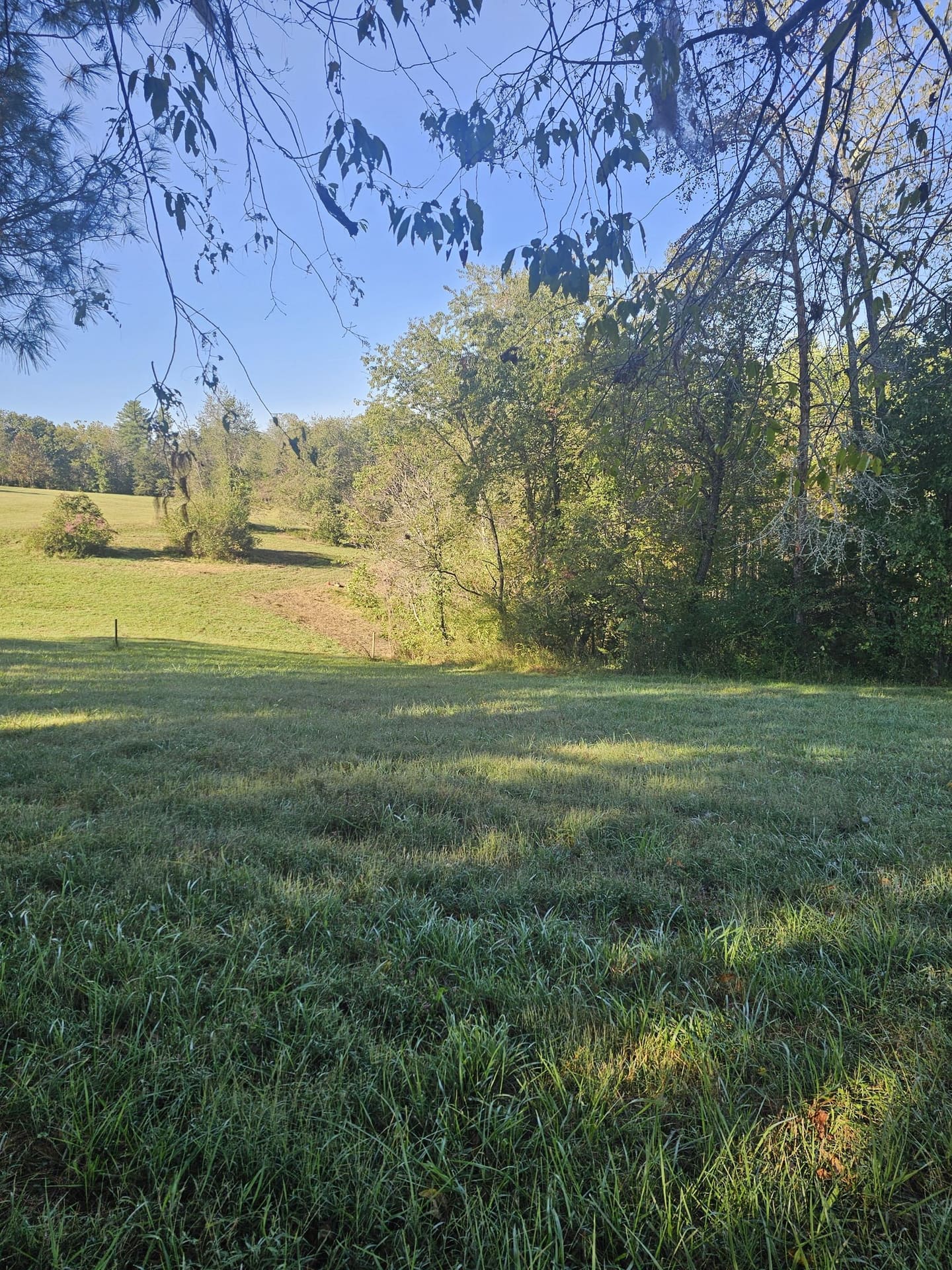 Before
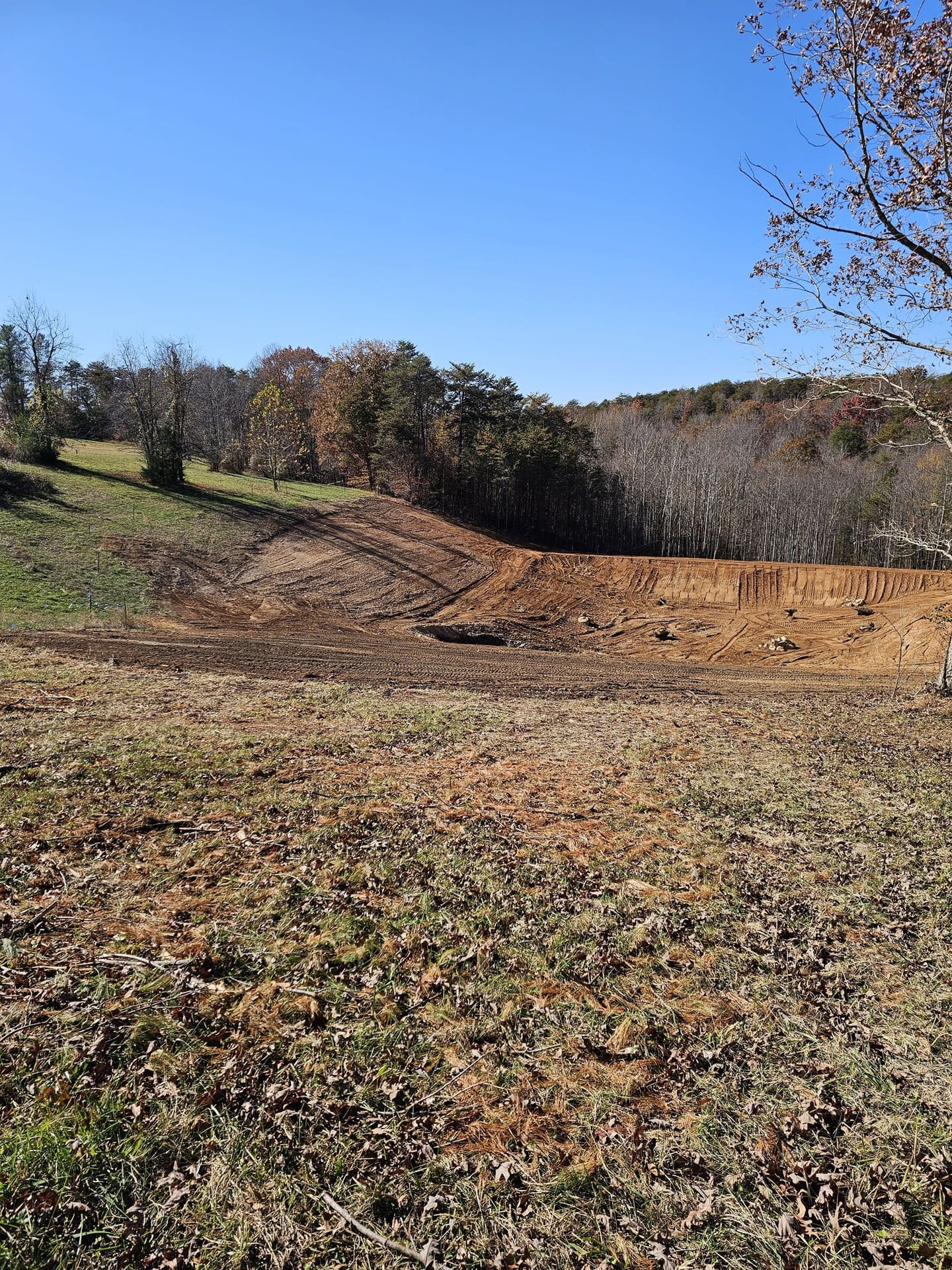 After
Farm Pond Questions
Is a farm pond exempt from permits in North Carolina?
Some are, but it is never automatic. Agricultural ponds can qualify for exemptions from certain federal wetland permits and state erosion plan requirements, and those exemptions come with conditions. Ponds for aquaculture are treated differently. Check with your county Soil and Water Conservation District before work starts.
Is there cost-share money for building a farm pond in NC?
The NC Agricultural Water Resources Assistance Program, known as AgWRAP, has offered cost share for ponds that supply irrigation or livestock water, with higher rates for new and limited-resource farmers. The program calls for an engineer-sealed design and a maintenance commitment. Availability changes, so ask your county Soil and Water Conservation District.
Should cattle drink directly from the pond?
They can, but cattle standing in a pond can tear up the banks and foul the water. Many farmers fence the pond and run water to a trough below the dam or set up one hardened access point. Plan this before the pond is built, while the work is easy to include.
What is the difference between a farm pond and a fishing pond?
Mostly what it is designed around. A farm pond is built around dependable water supply and access. A fishing pond is built around depth, edges and fish habitat. Many ponds do both, and we will help you decide which matters most.
Need Water on Your Place?
Tell us about your land and what the water is for. We will walk the site with you and give you an honest opinion and an estimate.